Sunday, March 23, 2008

Lobos marinos- swimming with the sea lions

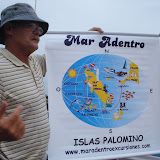
On March 10 a group of us chartered a boat to go to some uninhabited islands off of Lima with a company I'd highly recommend http://www.maradentroexcursiones.com/contenido.htm

These uninhabited islands used to be home to Peru's version of Alcatraz prison and previously were used by pirates. Now there are just birds and colonies of sea lions, which are "lobos marinos"- sea wolves- in Spanish.


you can download the album here
Lobos Marinos- swimming with the sea lions

Saturday, March 22, 2008

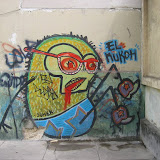
Graffiti around Miraflores, Lima


For some reason the graffiti around my apartment in Lima is less offensive and more playful than in the US; I quite enjoy a lot of it.

Download album here:
Lima_Grafitti

Saturday, January 12, 2008

MIT meets Peruvian orphans and farmers- an unlikely but good fit

For the past week I have been been playing a bit part in facilitating a student-faculty team from MIT called "D-Lab" who are in Peru for 3 weeks. Their technological answers to improving life in places like Haiti, Africa, and right here in Peru are intriguing. Their reasoning for doing so is compelling.

First, here is a snapshot of what D-Lab is and does from the NY Times this past September

Then here is a longer NY Times Magazine article about Amy Smith, which describes her and explains her philosophy better than I could hope to

And here is a video about the charcoal project

So they have a lot of interesting low-tech engineering solutions for the developing world; where Peru comes in is with the applications. I basically have been plugging them into the places here in Lima where they can help, and in the end Lima sure does seem like a good fit. A good fit because they are a group of anti-high-technology engineers, and high tech is not doable (dare I say "sustainable"?) in the developing world. High does not mean appropriate, high tech does not mean that it works.

It has been like showing around a group of low-tech groupies, meant completely as a compliment. Their first question when they arrived after an overnight flight was where to find the street market metalworking shops- they wanted to personally see what materials were available and whether the local craftsmen could duplicate several of their simple machines. Technology is only truly transferred if it can be made and repaired locally. On the way we stopped to take pictures of every bicycle and rolling knife sharpener we passed- Gwyndaf, who had retired after selling the high-end bicycle frame company he started, has been converting bicycles into pedal powered things as different as corn huskers and washing machines, and being around him is like listening in on a mobile brainstorming session. After the craftsmen were visited, we met with an NGO that services tens of thousands of farmers and helps teach them how to do business; Amy showed them the bicycle powered corn husker, their water purification method by simply leaving it in the sun, and about a dozen more neat solutions. The team is now going to Cuzco, a town near Machu Pichu, to demo their things and figure out if their tech fits a need and can be adapted to local circumstances (such as whether their peanut sheller can be adapted to shelling a local nut).

Next we went to a massive orphanage about an hour and a half outside of Lima- it has 600 children from all over Peru and basically sits on the side of a sand hill in a desert. After being swarmed by about 50 little children who politely lined up to greet us (hand shakes for the boys and cheek kiss for the girls), the first thing I noticed was that an adult and 3 or 4 boys were welding together a rabbit cage out of rebar and chicken wire- they were trying to raise more rabbits for food. The home, named Comunidad de Ninos Sagrada Familia (Community of Children Sacred Family) struggles to keep everyone fed and clothed because it both gets no government support and does not turn kids away (video interview with English translations below). With 600 mouths to feed, the biggest cost is food e.g. they eat about 3,000 biscuits per DAY and buying flour is twice as expensive as buying the grain would be. Just so happens that Amy did her masters thesis on making low cost electric mills that could cut that huge expense in half. With nothing more than a few oil drums full of corn cobs (which I had an interesting time dumpster diving for in the market the week before), the team spent 2 days showing a group of older boys at the home how to turn corn cobs and any other organic waste into charcoal, which could be sold at the market or used to cook the bread for the children. Washing clothes by hand for 600 kids is also very labor intensive, and so the pedal powered laundry machine would be a perfect fit as well, and the dirty water could be put into drip-irrigation gardens that could be made on the sandy hill of the home. After all of the project talk and demos, the MIT crew went through the several buildings of the community and was repeatedly swarmed with attention-hungry cute kids, from the 2 year olds wanting to be held to the teenagers practicing their English. That is one reason that this was a good fit- making the home more economically stable lets them do what they know how to do well. Technology and economics are what enables the important things to be done, and the goal is always really the people.

On the way out of Sagrada Familia we found two turtles in the pitifully small garden with string leashes passing through their pierced shells. I asked the children if the turtles would eat the plants and why the obvious pets were there. No, they only ate bananas. They were there because they were the only thing that two children brought with them when they came to the orphanage from the Amazon- they were family too. In this small observation I saw children being raised to understand that what is important in life are relationships and taking responsibility for those relationships.

The D-Lab is something special and unique because they are not letting political borders get in the way of their relationships or our responsibilities.

Here is the story about how Sagrada Familia started by its founder, Miguel Rodriguez

Wednesday, November 7, 2007

Island in the Sun

You would be catching your breath after a flight of stair too, if those stairs were at 12,000 above sea level like they are in La Paz, Bolivia. I am currently in Bolivia to study mother-to-child transmission of Chagas disease.

Bolivia lays claim to having many of the world's highest things- La Paz is the world's highest capital at 11,800 feet above sea level (and FIFA even had a ban on playing soccer games at this altitude until recently), Lake Titicaca being "the world's highest nagivable lake" (technically not correct as small craft can go in several higher lakes, but Titicaca has a max depth of over 400 meters), etc.

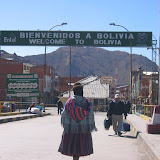
After working at Hospital Universitario Japones for a week and a half, it was necessary to return to the Peruvian border to get some research equipment that our Peruvian colleagues were taking to the border for us. This trip was a great excuse to visit the famous Lake Titicaca (Copacabana and Isla del Sol) and the pre-Incan ruins at Tiwanaku.


download this album here:
LaPaz, Tiwanaku, Lake Titicaca


Here are some photos from my trip from Lima to Arequipa, Peru (airplane) to Puno, Peru (bus) to La Paz, Bolivia (bus) to Santa Cruz (airplane)


download this album here:
Lima, Peru to Santa Cruz, Bolivia

Tuesday, September 25, 2007

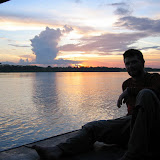
The Great River Amazon Raft Race 2007


At noon last Tuesday I received an email: there was a raft race on the Amazon and a team needed an extra man. They were flying out the following morning at 5AM and I could step in if I could jump on fast enough.

Of course I jumped.


I flew to Iquitos the next day and crashed at the house of a team member for the night before starting what promised to be an adventure of epic proportions.

It is called the Great River Amazon Raft Race and brags about being the world's longest raft race at ~132 miles. The rules are simple: each 4 person team gets 8 logs and some jungle vines and makes their own rafts, then for 3 days they paddle down the Amazon River, stopping at a village called Porvenir the first night and a town called Tamshiyacu the second night.


View Larger Map

My team was Proyecto Dengue 1 (Project Dengue); it consisted of Amy, an entomologist who studies Dengue Fever and the mosquitos that spread it in affiliation with the US Navy and UCSD, Jackie, a grad student in entomology working with Amy, and Rod, a British physician who has been working on tuberculosis ventilation systems in Peru for a few years. Proyecto Dengue 2 consisted of 4 Peruvian field workers that work with Amy.

We collected big balsa logs from a boat then started whacking away at the ends of the logs with our little machete. Then a Mr. W, who lived across the river from the beach we were building the rafts on, showed up with an axe and offered to help us build our raft; after that he pretty much took over. Our unique design was to have a catamaran such that we could paddle in the center when paddling on the outside got tiring; Rod also very wisely thought to bring some lawn chairs, which we chopped down to size and then carved holes for and lashed them down in the back. I think it's fair to say that we had the most daring design.

Before the race even started, we had 2 people go to the hospital. One Australian gentleman who was in the race got stung by a stingray walking from the support boat to shore (the support boat was a double decker boat where we hung hammocks on the open top floor to sleep and below was storage); he needed to go to the hospital for anti venom. The second was a pretty British gal who had a nasty case of food poisoning.

Day 1: Saw what we thought was a kingfisher & lots of dolphins; the Amazon is one of the few places in the world with freshwater dolphins called Boto, some of which are a bright pink. We were thankful that it was cloudy, but I learned a lesson:
just because it's cloudy doesn't mean that the sun has gone away- the proof is that I burned the heck out of my feet, resulting in a fine "Irish suntan."
Overall spent about 7.5 hours rowing and we were all pretty hurting by the end. We stopped in the little village of Porvenir, which was basically a few community buildings surrounding a distillery where "Agua Arriente" or firewater was made from sugarcane- that stuff packs some punch I can tell you! We heard that another team had seen a poisonous water snake swimming along as well. It was great to get to know the stories of some of the international teams- there were representatives from at least Australia, the US, Canada, Mexico, Germany, Switzerland, Holland, and Tasmania (apologies if I'm forgetting some). There were the 4 funny guys from the US doing Peace Corps in Ecuador, the 4 Tasmanian river guides who said that this trip was as long as their entire island, the ringer team from Mexico-Germany-Canada-US who do competitive paddling and were clearly going to win for the international teams, the backpacker teams who met each other for the first time while building rafts, and others. It was relieving to hear from the Tasmanian river guides that the river was almost impossible to read and that they were going from competitive mode to enjoy the ride mode- made us feel better about ourselves, even though we finished a respectable 3rd place for the international teams on the day.

Day 2: This was the longest day at about 9.5 hours on the river. The coast guard actually had to go out looking for 2 late rafts after dark and so some towing. Now everybody knows that the Amazon River is long, but it really is an added challenge that it is so wide. In most places it seemed to be wider than the lakes I know from back in the US, and if I had to guess I'd bet that it was more than a half mile wide in most parts. This is frustrating because you have no point of reference to give you a sense of movement- you paddle for hours around these huge bends and can't tell if you're going forward or sideways or backwards. We were, luckily, able to take a somewhat narrower route in which the current seemed to move a bit faster and where the river was close enough that we felt we were trucking. We spent the night in the town of Tamshiyacu, where they had paved roads and the town actually put on a big performance with the school children in honor of us and then threw a party, which was great.

Day 3: We were all pretty tired by this point and the muscles were just feeling toasted. After 7 something hours, we reached the home stretch- an upstream paddle to the finish (the city of Iquitos is on a tributary of the Amazon River, which we had to paddle up). There were tons of local kids playing in the water to greet us (and snag a bit of a free ride) and a good turnout at the local boating house to see the end to this interesting endeavor. It was kind of abrupt to be leaving our little raft and the excellent company of Proyecto Dengue 1, but it was nice to give the arms and back a rest. It really hit me that the race was over when D, who was our support person and looked out for us, handed me a much appreciated cold beer.

This is one of those things you get to do once in your life, if you're lucky, and I feel very fortunate to have been a part of it.

Click on my photo below to go to my Picasa album, which has images linked to a map and high resolution photos.
The Great River Amazon Raft Race 2007

Thursday, August 16, 2007

Quake aftermath


The aftermath:
7.9 quake
At least 337 Dead and the death toll might be much higher (e.g. 300 people were in a cathedral when it collapsed)
Supposedly 70% of a port city near the epicenter was leveled


It was on the front page of nytimes.com (this photo is from nytimes.com & I will take it down if asked)

http://www.nytimes.com/2007/08/16/world/americas/16cnd-peru.html?ex=1187928000&en=aca5b5d5be4d63cf&ei=5070&emc=eta1


Did you know that the west coast of South America (where Peru is) is the location of 2/3 of the world's large magnitude earthquakes?
So earthquakes are nothing new for Peru- who would have guessed it? There is an annual festival to commemorate a quake in 1746 when 5,000 people died (the Miracle Christ festival), and it is custom to wear purple in the month of October to commemorate the event.

This site has a great short history of quakes in Peru:
http://earthquake.usgs.gov/regional/world/peru/history.php

Wednesday, August 15, 2007

Quake in Lima

Today I was in my first earthquake, just 2 hours ago in the "gringo house" in Lima. The BBC says it was a 7.5 on the Richter.
Even more amazing, the phone company finally connected the internet in the gringo house!
But back to the quake.
It was strange but not at all scary. The house suddenly started shaking & the little wooden statue of an Incan playing a flute fell to the floor. The ground in the little square in front of the house undulated ever so slightly. The local people, or at least some of them, started panicking and one of them, a little old lady, clutched Gwen's arm and started speaking Spanish at a pace that would put the micro-machine commercial guy to shame.
A half hour or so later was an after-shock, and that was less strange because it was expected.
http://news.bbc.co.uk/2/hi/americas/6948888.stm
Anyhow, I'll try to fill out the story later, but for now I am heading out to drink Pisco (the local liquor, somewhere between sake & whisky) in the farewell party for a fellow gringo medical student.